
Outlining One Grain of Sand With Save the Cat (Without Spoiling the Story)
Some books begin as thunder. Others begin as a pebble in your sock, that won’t stop sliding around between your toes as you attempt to hike uphill on a particularly perilous excursion.
One Grain of Sand began as a question I couldn’t put down.
What happens to an ordinary person when the world decides they are no longer a person, but a problem? What happens when “procedure” becomes a mask for cruelty, and the machinery of modern life—paperwork, cameras, databases, policies, polite voices—turns into a kind of weather you can’t step out of?
I kept thinking of the classic Rod Serling problematic question “what would happen if this went on, as it is currently, unabated?”
That question is dystopian by nature. Dystopia is what you get when you take the anxieties already in the air and turn the dial up until you can hear the frequencies we usually pretend aren’t there.
And yes—there are times when dystopian stories feel uncomfortably relevant, not because writers are prophets, but because power, fear, and human appetite tend to repeat their habits. Lit Hub has a sharp essay that opens with that exact cultural sensation—people asking “what stage of dystopia is this?” in response to modern headlines (surveillance, climate disasters, rancorous tribal politics bent on sowing divisiveness, and more).
So I wrote my story like a warning bell and a pulse-check at the same time—without preaching. Because dystopia works best when it’s not a lecture; it’s a lived experience. Tor/Forge’s old but still useful craft post says dystopias work because the adversity is universal—the world itself becomes the obstacle.
But questions and themes are only the fire. To cook a whole novel, you need a stove. You need structure.
That’s where Save the Cat came in.
Why I chose Save the Cat for a dystopian novel
Save the Cat (STC) gets described as a screenwriting method, but it’s really a practical way of thinking in turning points—moments where the story’s direction changes and the character’s interior weather changes with it. The STC site itself shows beat sheets for novels as well as films.
I used STC for one reason that matters more than any diagram: it gave me a way to design momentum in a story that deals with heavy subject matter. Dystopias can become bleak puddles if they don’t keep moving. They can get lost in atmosphere, or trapped in explanation, or drowned in “and then society was bad again.”
STC helped me avoid that by giving me a sequence of promises and payoffs. It kept the narrative from wandering and it kept my main character from becoming a passenger in his own book.
For readers who want a novelist-friendly explanation of the STC beat sheet, Jessica Brody has a clear walkthrough aimed at book writers.
Savannah Gilbo also has a craft breakdown of plotting with STC for novels that emphasizes the function of each beat.
How I used the beats (in spirit, not as a paint-by-numbers kit)
I didn’t sit down and say, “Now I will obediently fill fifteen boxes.” I treated the beats like pressure valves—places where a story must change temperature.
Opening Image and Set-Up: the world’s “normal,” and the lie it runs on
Every dystopia needs a baseline. Not pages of worldbuilding—just enough ordinary life for the reader to recognize the human stakes.
The opening of One Grain of Sand is designed to establish a world that is close enough to ours to feel plausible, but tilted enough to make you uneasy. The key is that “normal” is never neutral: it’s a compromise the characters have accepted.
That’s one of dystopia’s quietest tricks: it doesn’t arrive with banners. It arrives through routines.
Lit Hub has an essay that calls dystopia “realism” when it’s done well—reality shown through an extreme metaphor, a refractive prism.
That’s the approach I aimed for: not “look at my invented tyranny,” but “look at the familiar forces, extrapolated to a point where you can’t ignore them.”
Theme Stated: the book whispers what it’s really about
STC has a beat called “Theme Stated.” I think of it as the moment the book quietly says, This is the question we’ll be paying for.
In a dystopian novel, theme is often about power—who has it, who loses it, and what people do to keep it. The theme isn’t a slogan. It’s a lens. It tells the reader what kind of story they’re in: a cautionary tale, a survival tale, a moral test, a testimony.
One reason dystopias matter in precarious times is that they let us imagine the consequences of today’s habits, but from a safe distance—like studying a storm from behind glass. A guest post on Lyn Miller-Lachmann’s blog argues dystopian fiction draws from current events and readers engage with it partly because it feels like “advance warning” and a way to examine fear.
Catalyst and Debate: the shove—and the human refusal
A dystopian book can’t just be grim. It needs ignition.
In STC terms, the “Catalyst” is the event that breaks the old life. The “Debate” is where the protagonist tries—like any human being would—to talk themselves out of the new reality.
For One Grain of Sand, I used that debate space to make the protagonist recognizable. Dystopia becomes emotionally potent when the protagonist’s first instinct is what ours would be: surely this can be fixed. Surely there’s been a mistake. Surely the system will correct itself.
And then, slowly, the story begins showing what dystopias are always showing: systems don’t correct themselves; they protect themselves.
Break into Two: when the book commits to its premise
This is the point where the story stops teasing and starts delivering. The character crosses into the “new world”—which in dystopian fiction is often not a new planet, but a new layer of the same society. The protagonist discovers the rules are different now, and “rights” are conditional.
This is where STC is especially helpful for dystopia: it forces you to commit. It doesn’t let you stay in the introduction too long.
Fun and Games: yes, even dystopia needs this
People misunderstand this beat because of the title. “Fun and Games” doesn’t mean jokes. It means: deliver the premise.
In a dystopian book, this is where the reader sees the machinery of the world in action—how surveillance works, how institutions rationalize themselves, how people adapt, how resistance looks, how propaganda sounds, how fear becomes ordinary.
Reactor/Reactormag (formerly Tor.com) has a round-table post noting that dystopian fiction can carry critique more effectively in fiction than as nonfiction because it gives critique “the mantle of story.”
That’s what this stretch does: it shows the premise doing its work, not as a lecture, but as a sequence of lived moments.
Midpoint: the “truth gets louder” pivot
In STC, the Midpoint is often a false victory or false defeat—either way, the stakes change. For dystopia, the Midpoint is where the story often moves from “maybe this is survivable” to “this is built to crush you.”
This is also where the protagonist begins to change from reacting to choosing—because dystopias are, at heart, moral pressure chambers. The question becomes: what kind of person will you be, now that the world has revealed its teeth?
Bad Guys Close In → All Is Lost → Dark Night: the tightening, the drop, the reckoning
These beats are where STC shines for heavy books, because it insists on a structured descent and an earned return.
A dystopian story needs a “down” that feels inevitable—and a “down” that forces the protagonist to confront the real theme. Not just “things get worse,” but “the character is stripped down to what they truly believe.”
Lit Hub has another essay arguing that dystopian fiction often longs for a better world—that the bleakness is not the point; the point is what the bleakness makes visible. That longing for what could be is what gives the dark section(s) their meaning and heart and soul, where the book hurts because it measures what could be lost.
Break into Three and Finale: the story earns its forward motion again
Without spoiling anything, the final movement of One Grain of Sand is built on a simple STC principle: the character cannot walk into the end with the same assumptions they had at the beginning. They must carry new knowledge, new scars, new choices; after having been transformed by experiences, adventures, and insights.
The finale in STC terms is not just “action.” It’s proof. Proof of what the protagonist has learned. Proof of what they will do with that learning.
And then the Final Image answers the Opening Image—not by repeating it, but by transforming it.
That’s the structural magic: a story closes a circle without feeling like it has repeated itself.
Why dystopian literature is worth writing (and reading) when the air feels unstable
When the world feels politically precarious, some readers want escape. Others want confrontation. Dystopia can do both, strangely enough: it’s an escape into a made world that reflects our real world more clearly.
A BookBaby craft post literally calls the moment we’re in “dystopian times” and argues dystopian fiction amplifies contemporary problems to examine them more sharply.
And Mindy McGinnis writes about the appeal of dystopian fiction—why people are drawn to it despite the darkness—framing it as a way to explore fear and resilience.
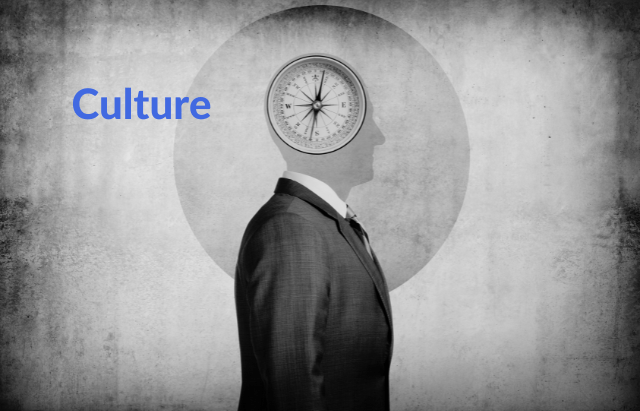
I’ll add my own view, as a storyteller: dystopian fiction is a way of putting a hand on the radiator and asking, How Hot is Too Hot? It lets us imagine outcomes before we’re forced to live in them. It lets us test the accuracy of our moral compass when we’re lost at sea, adrift, alone, with only a few days’ of food left, wondering how we’re going to make it to safety – if we will….and wondering what matters most if the glass face of that compass is shattered.
And that’s why I wrote One Grain of Sand, Book One of the Shards of a Shattered Sky trilogy, the way I did: with a dystopian heart, but a very practical skeleton.
Save the Cat gave me the skeleton.
The world gave me the organs.
Sources Cited:
SAVE THE CAT (novelist-friendly)
- Save The Cat Beat Sheets
- Write Your Novel Using Save The Cat Beat Sheet
- Savannah Gilbo Plotting Save the Cat
DYSTOPIAN LITERATURE: VALUE + “WHY NOW?”
- Why We Fear Real Life Dystopian But Love Dystopian Fiction
- Dystopia is Realism If You Look Closely
- Dystopian Fiction Longs for a Better World
- Dystopian Round Table the Appeal of Dystopian Fiction
- BookBaby: Writing Dystopian Novels
- How Dystopian Fiction Draws from Current Events
- Why Do People Find Dystopian Novels So Appealing
- Why Read Dystopian Novels
