
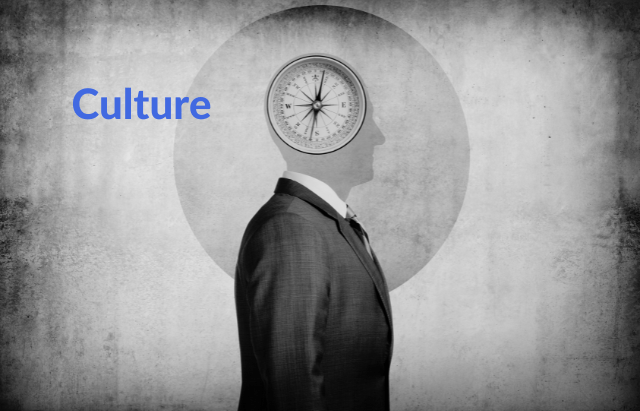
Over the course of a few decades, I’ve worked as a political campaign advisor, teacher, college professor, digital marketing agency owner, mediation nonprofit proprietor, and commercial copywriter. If you spend enough time in American public life as I have—whether you’re scrolling social media, watching political debates (and God help you if you try to advise them), or even sitting in a classroom—you may notice a subtle but seismic shift, a sliding and slowing erosion happening right beneath the surface of our shared cultural moment: a growing emphasis on the self. Not merely self-expression or individuality, which have long been celebrated in the United States as virtues and values worth pursuing, but something sharper, more corroded—self-importance, attention-seeking, and most troublingly, a dramatically diminished capacity for empathy. In short, traits commonly associated with narcissism.
But how prevalent is narcissism in American society, really? And what might that mean for the country’s social fabric—the delicate, interwoven threads that hold us together?
What We Mean by Narcissism
Before proceeding further, it’s important to distinguish between clinical narcissistic personality disorder (NPD), which remains relatively rare, and narcissistic traits, which exist on a spectrum—a sliding scale of self-regard and entitlement. These traits include an inflated sense of self-importance, a consuming craving for admiration, an acute sensitivity to criticism, and a demonstrated difficulty empathizing with others.
Over the past few decades, psychologists have been documenting a troubling upward trajectory. Studies tracking college students have found modest but measurable increases in self-reported narcissistic traits since the late twentieth century. More strikingly, research comparing college students from 1979 to 2006 found a roughly 30 percent increase in narcissism scores using the Narcissistic Personality Inventory (NPI). This rise has continued: contemporary analyses reveal that approximately 70 percent of college students today score higher on narcissism—and notably lower on empathy—than the average student did merely three decades ago. Additionally, a comparison of college freshmen shows that 59 percent rated themselves above average in intellectual self-confidence in 2014, compared to only 39 percent in 1966. At the same time, cultural shifts—especially the exponential explosion of digital platforms—have created environments where self-promotion is not only normalized but algorithmically rewarded, incentivized, and amplified at every turn.
The Cultural Engine: Individualism Overheating
American culture has always leaned individualistic, deeply favoring autonomy, ambition, and personal success as core values. These are not inherently negative traits; in fact, they’ve driven innovation, entrepreneurship, and economic growth. But when individualism intensifies into hyper-individualism—when it boils over into something verging on obsession—it can erode and eventually corrode communal thinking, shared purpose, and collective responsibility.
The message subtly shifts. Where once we heard “be yourself;” the contemporary refrain whispers something more urgent, more demanding: it’s be seen, be admired, be validated; Social media platforms amplify this dynamic with merciless efficiency, turning everyday life into a perpetual performance measured in likes, shares, follows, and followers. A photograph of your coffee becomes a canvas for self-curation; a meal transforms into a moment of public display. In such an environment, where visibility has become currency and engagement is everything, the line between healthy self-confidence and narcissistic self-focus becomes dangerously blurred, increasingly indistinct, nearly impossible to discern.
Implications for Sociology: Fraying Social Bonds
From a sociological perspective, rising narcissistic tendencies can weaken and gradually unravel the delicate glue that holds communities together. Trust, cooperation, and shared norms depend fundamentally on a baseline level of empathy and mutual consideration. When individuals become more self-focused—when their gaze turns increasingly and obsessively inward—collective responsibility and communal concern begin to suffer and fray.
This deterioration may show up in small, seemingly insignificant ways: reduced civic engagement, declining volunteerism, decreased participation in community organizations. But it manifests also in broader, more troubling patterns—declining trust in institutions, eroding faith in fellow citizens, and a growing skepticism about shared social projects. A society that prioritizes personal recognition over collective well-being, that celebrates individual achievement at the expense of communal good, inevitably struggles to solve problems that require sustained cooperation—from public health initiatives to environmental sustainability, from infrastructure development to educational equity. These challenges demand that we think beyond ourselves, yet narcissism systematically discourages such thinking.
Politics: The Performance Becomes the Substance
Nowhere is this psychological shift more visible, more undeniable, more corrosive than in politics. Modern American politics increasingly rewards visibility, emotional appeal, personal branding, and charisma over deliberation, nuance, and policy depth. Politicians are systematically incentivized to cultivate strong, often polarizing identities that attract devoted attention and inspire fervent loyalty. In such an environment, traits associated with narcissism—grandiosity, a ravenous need for admiration, and an intolerance of criticism—can become political assets rather than liabilities.
Recent research reveals something particularly troubling: narcissism is strongly correlated with political polarization. Studies published in 2024-2025 found that individuals exhibiting higher levels of narcissistic traits—particularly those who display “rivalry” narcissism (characterized by defensiveness, entitlement, and antagonism)—are significantly more likely to report both stronger emotional ties to their political in-group and more intense animosity toward political opponents. The rivalry dimension of narcissism proves more powerfully associated with polarization than other personality factors. Remarkably, this pattern holds consistently across party affiliation and ideological stance—whether someone identifies as conservative, liberal, or somewhere between, narcissism predicts more extreme political attitudes.
This dynamic intensifies polarization in dangerous ways. When political identity becomes an extension of personal identity—when disagreement feels like a personal attack rather than a policy difference—the political culture becomes louder, more reactive, less capable of compromise. What emerges is not reasoned debate but tribal warfare dressed in the language of principle.
Education: Self-Esteem, Entitlement, and the Myth of Merit
American education has been profoundly shaped by cultural shifts toward self-esteem building and personal affirmation. While fostering confidence in students is genuinely important, critics—drawing on extensive research—argue that an overemphasis on validation can come at the expense of resilience and accountability. Grade inflation, the ubiquity of participation trophies, and the cultural message that everyone is special and deserving has created a generation increasingly unprepared for the reality of failure, rejection, and setback.
If students are consistently shielded from failure or genuine criticism, they may fail to develop the coping skills needed for real-world challenges and resilience. In more extreme cases, this can reinforce entitlement—the expectation of success without corresponding effort, without the grinding work and dedication that genuine achievement requires. Simultaneously, digital culture has infiltrated classrooms, where students are not merely learners but also curators of their own public identities. This creates a subtle but persistent shift in attention away from deep learning toward impression management, away from the transformative power of education toward the performance of being educated.
Culture: The Endless Performance of the Authentic Self
American culture—particularly entertainment and media—has become increasingly centered on personal narratives, individual stories, and the mythology of the self-made. Influencer culture, reality television, personal branding, and the relentless promotion of individual achievement all reinforce the dangerous idea that one’s value is inextricably tied to visibility and recognition. We have created an entire apparatus of validation that runs on the currency of attention.
Even authenticity, paradoxically, has become a performance. The pressure to appear unique, successful, emotionally compelling, and perpetually interesting creates a cycle of comparison and self-promotion that feeds narcissistic tendencies while simultaneously increasing anxiety, dissatisfaction, and a pervasive sense of inadequacy. Social media produces a physiological reward—a dopamine rush—when posts receive validation through likes and shares, creating a feedback loop that reinforces narcissistic behavior. Research indicates that heavy visual social media users show a 25 percent increase in narcissistic traits, and approximately 20 percent of such individuals may cross the threshold for clinical NPD diagnosis based purely on their usage patterns.
A Nuanced Reality
It would be too simplistic, too reductive to declare that America is becoming “a narcissistic society” wholesale and without qualification. Many countervailing trends exist and persist: growing awareness of mental health, expanded conversations about empathy and inclusion, movements that emphasize community and collective action. Moreover, what appears to be narcissism in one context may actually reflect adaptation in another. In a competitive, media-saturated, algorithmically-driven environment, self-promotion can be a rational strategy for survival, for visibility, for economic necessity.
Where This Leaves Us
The more useful question is not whether narcissism is rising in absolute terms—the research suggests it is—but rather how our cultural incentives are systematically shaping behavior and rewarding narcissistic traits. If American society continues to reward visibility over substance, self-promotion over cooperation, certainty over humility, and performance over genuine connection, then narcissistic traits will likely remain advantageous and therefore prevalently persistent.
The challenge, then, is fundamentally cultural rather than purely psychological. It involves deliberately, consciously rebalancing values: elevating empathy alongside ambition, community alongside individuality, depth and substance alongside performance and spectacle. It requires resisting the gravitational pull of validation-seeking and remembering that the deepest, most meaningful aspects of being human often exist in the quiet spaces, the unlisted moments, the connections that generate no metrics and produce no content.
Because a society that loses its capacity for mutual understanding, for genuine empathy, for seeing across divides—that society doesn’t just become more self-focused. It becomes more fragile, more vulnerable, more prone to fracture. And fragility, unlike narcissism, is something no culture can afford to ignore.
Sources Cited:
- https://www.apa.org/monitor/2009/02/narcissism
- https://pubmed.ncbi.nlm.nih.gov/18505318/
- https://psycnet.apa.org/record/2008-12392-001
- https://journals.sagepub.com/doi/10.1177/0146167208328066
- https://www.sciencedirect.com/science/article/abs/pii/S0747563213000801
- https://www.tandfonline.com/doi/abs/10.1080/15213269.2013.770354
- https://cyberpsychology.eu/article/view/4336
- https://www.realclearscience.com/blog/2022/04/09/americas_narcissism_epidemic.html
- https://www.psychologytoday.com/us/blog/freedom-learn/201401/why-is-narcissism-increasing-among-young-americans
- https://www.psychologytoday.com/us/blog/the-human-beast/202402/why-narcissism-is-rising
- https://therapymatters.co/npd-statistics-2026/
- https://www.newportinstitute.com/resources/mental-health/social-media-narcissism/
- https://pmc.ncbi.nlm.nih.gov/articles/PMC12053521/
- https://www.psypost.org/narcissism-may-be-fueling-political-polarization-according-to-new-psychology-research/
- https://www.cambridge.org/core/journals/bjpsych-advances/article/current-understanding-of-narcissism-and-narcissistic-personality-disorder/4AA8B04FB352F8E00AA7988B63EBE973
- https://pmc.ncbi.nlm.nih.gov/articles/PMC5783345/
- https://pubmed.ncbi.nlm.nih.gov/39324281/
- https://journals.sagepub.com/doi/10.1177/13684302241240689