
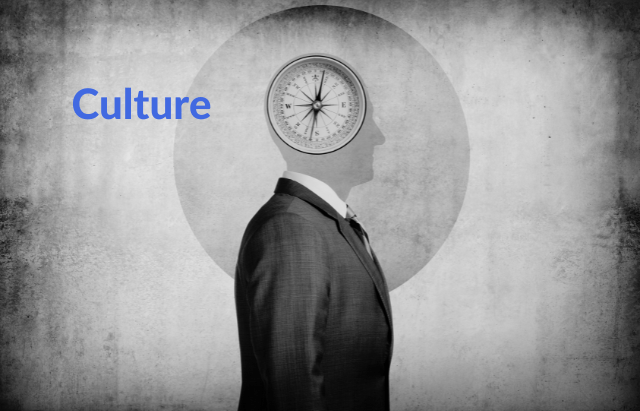
The Narratives of Post-Humanism: How Speculative Fiction Redefines Identity and Consciousness
Post-humanism is what happens when the mirror stops agreeing with you.
For centuries, storytelling has treated “the self” as a stable thing: a person in a body with a name, a past, a voice, a singular point of view. But speculative fiction—especially in the age of networks, artificial intelligence, bioengineering, and hybrid existence—keeps asking a question that is both thrilling and unsettling:
What if the self is not one thing?
What if identity is distributed—across machines, across bodies, across copies, across social systems, across time?
Post-human narratives are not just about cyborgs and downloads. They are about the collapse of old boundaries: human versus machine, mind versus body, individual versus network, self versus environment. And because these boundaries are narrative boundaries too, post-humanism forces writers to evolve their storytelling forms.
Neuromancer and the myth of the body as the only home
In cyberpunk—especially in Neuromancer—one of the central shocks is that consciousness can operate in spaces that are not physical. Cyberspace becomes a kind of architecture of mind, a place where identity can feel both liberated and captured. The body is still present, still vulnerable, but the self has an extension cord plugged into a larger grid.
This is a post-human tension that remains urgent today: technology promises transcendence while also creating new forms of control. In narrative terms, the story becomes a negotiation between freedom and enclosure. The protagonist’s mind can roam, but the systems around that roaming are owned—by corporations, by AIs, by invisible infrastructures.
The Matrix: reality as a narrative problem, not only a plot twist
The Matrix dramatizes a post-human anxiety: if perception can be engineered, what is “real”? If your nervous system can be fed a world, are you still you—when your experiences are curated by code?
This is why post-human stories often lean on uncertainty, layered realities, and philosophical argument. The plot becomes less “fight the robots” and more “define the conditions of human freedom.” Identity becomes something you must choose and defend, not something you simply are.
Narrative frameworks that fit post-human identity
Post-human stories often require new forms because old forms assume a stable self. Some strategies that fit especially well:
1) Shifting viewpoints between human and AI
2) Braided or network narratives
3) Second-person and “you” narration
4) Fragmented memoir / recovered data / archive storytelling
5) Unreliable narration as an identity symptom
Post-humanism isn’t just technology; it’s the environment and the “more-than-human”
Humans are porous. We are ecosystems. We are shaped by microbes, climates, infrastructures, and nonhuman entities. Some post-human narratives make this literal: consciousness entangled with environment, identity shaped by symbiosis, agency shared with other species or systems.
This shifts story focus away from lone heroes and toward networks and relationships.
How post-human narratives question the stability of selfhood
Post-human speculative fiction repeatedly undermines three assumptions:
1) The self is singular.
2) The self is stable across time.
3) The self is located only in the body.
Once you undermine these, plot changes. Conflict changes. Character arcs change. A character arc may become not “learn courage,” but “define personhood.” The antagonist may not be a villain, but a system that classifies people as property, code, or product.
Avoiding tired post-human tropes
Post-human fiction can fall into grooves: cold AIs, “humans are obsolete” speeches, augmentations as simple power fantasy, bodies treated as disposable.
To avoid this, write post-humanism with lived texture:
– How does augmented identity affect intimacy?
– How does it affect grief, memory, family, desire, religion?
– Who gets augmentation, and who is left behind?
– What new inequalities form?
– What new solidarities form?
Post-humanism is not automatically pessimistic. It can be liberation, expansion, new ethics, new kinship. The point is not to worship the machine or fear it. The point is to ask what becomes of humanity when “human” is no longer a fixed noun.
The best post-human stories don’t tell us what to think.
They make us feel the question living inside our ribs.
Works Cited:
- https://medium.com/@asarav/posthumanism-what-is-it-4edc759189d9
- https://ivancionyata.medium.com/transhumanism-and-identity-in-william-gibsons-neuromancer-30d3ab42b125