
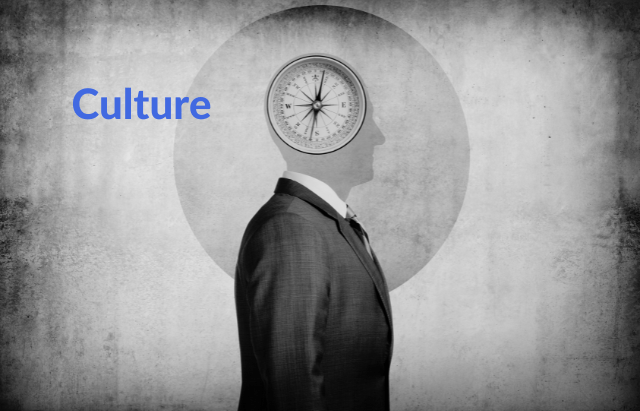
They gave him a number. He refused it. That refusal — three small words detonating inside the beautiful, sinister, strangely cheerful architecture of an impossible Welsh village — is the axis around which seventeen episodes of the most singular television drama ever produced revolve like planets around a sun they cannot escape. I am not a number. I am a free man.
The Prisoner first broadcast in Britain on 29 September 1967 and concluded its 17-episode run on 1 February 1968 — the same span of months, appropriately, in which the counterculture began its long collision with the establishment, the same months in which the Vietnam War ground its particular obscenity into the world’s conscience, the same months in which a generation looked at the systems their parents had built and asked, with gathering fury: whose side are we on, exactly? The show was sold to ITC’s Lew Grade as a thriller, a sequel of sorts to McGoohan’s enormously successful spy series Danger Man. What McGoohan delivered was something else entirely — something that has been called Kafka on Carnaby Street, a spy thriller that owed more to Buñuel or Beckett than Bond, the single most formally adventurous piece of drama that British television has ever produced, and the series that the British Film Institute cited in 2017 as still having prophetic lessons for us about politics, technology, social conformity and television itself.
Patrick McGoohan — Irish-American, devoutly Catholic, intellectually restless, constitutionally incapable of producing anything that did not embed genuine ideas in every frame — created, co-wrote, co-produced, and starred in The Prisoner with an absolute creative control that is essentially unprecedented in television history, then or since. He was given a budget forty percent larger than most other ITC productions. He wrote a forty-page show bible. He used pseudonyms to direct and write episodes whose authorship he wanted obscured, his pen name Joseph Serf — serf, the medieval peasant bound to land and lord — a private joke at his own expense. He drove the show’s script editor George Markstein to resign halfway through the production. He wrote the finale in days after ITC’s Lew Grade cancelled the series. He watched the phones at ITV melt with rage when that finale aired. He briefly fled the country.
This post is an in-depth analysis of The Prisoner as a work of layered genre alchemy — the simultaneous deployment of science fiction, dystopian fiction, utopian fiction, and horror in a single sustained argument about the individual, the state, and the nature of freedom itself. Four case studies examine the genre categories in their purest episodic expressions. McGoohan and his collaborators speak in their own words throughout. And the post concludes where the show itself ultimately points: toward the world outside the Village, which the Village increasingly resembles.
The Production: One Man’s Vision, One Village, One Refusal
The genesis of The Prisoner is disputed in the specific details and clear in its essential outlines. George Markstein, who served as script editor on the first half of the run, claimed co-creation of the concept, citing a wartime rumor about a real facility called Inverlair Lodge in Scotland where agents who knew too much were kept in comfortable involuntary retirement. McGoohan had outlined the show’s themes in a 1965 interview, before Markstein arrived. Both things can be simultaneously true: Markstein brought the institutional plausibility, the spy-genre framework, the operational logic of the Village as a real-world facility where both sides kept their dangerously informed former operatives. McGoohan brought the philosophical engine, the theological ambition, the insistence that the show would not be merely another spy drama but an examination of the human condition in the confrontation between the individual and the systems that would reduce him to a number.
The exterior of the Village was Portmeirion — the extraordinary Italianate village in North Wales designed and built by architect Sir Clough Williams-Ellis between 1925 and 1975, a place of genuine architectural and aesthetic beauty that also functions as its own kind of uncanny: a perfectly composed fiction of a place, a constructed dream of Mediterranean warmth transplanted to the cold Welsh coast. Williams-Ellis intended it as a demonstration that new buildings could be added to a landscape without ruining it. McGoohan intended it as a demonstration that beauty and imprisonment are not mutually exclusive — that the pleasantest prison is still a prison. The pastel colors, the cheerful penny-farthing logos, the communal spaces designed for leisure and recreation: all of it is the nightmare that smiles.
McGoohan paid himself £5,000 per episode against a total budget of £75,000 per episode — modest self-payment for a creator who had turned down the role of James Bond twice because he found it morally objectionable, who had refused to include any romantic subplot in The Prisoner because he wanted the story to remain about ideas, who wore a pseudonym while directing episodes he considered too personal to sign publicly. His 1977 interview with the Canadian journalist Warner Troyer — recorded in Canada, where he had fled after the British reception of the finale, and rarely broadcast — is the most extensive account of the show’s meaning in his own words. In it he described the show as intended for a very small audience: intelligent people. People who would argue about it. People who would fight about it. That was his explicit goal.
Troyer asked him what he had been trying to say. McGoohan answered: I think the most evil thing on this earth is ourselves. It is within each of us. So, therefore, that is what I made Number 1 — oneself — an image of oneself which he was trying to beat. That answer, given in 1977, retroactively illuminates the entire run of seventeen episodes as an extended examination of a single question: what does the self do when the world wants to reduce it to a number? And the subsidiary question, which gives the show its particular darkness: what if the self, at its deepest level, is itself the jailer?
Science Fiction in The Prisoner: Technology as the Architecture of Control
The Prisoner is science fiction in the specific sense that its central horror is not supernatural or psychological but technological. The Village is a triumph of applied science in the service of social control: surveillance cameras covering every square foot of its cheerful grounds, wireless telephones in an era when even wired phones were not ubiquitous, computerized tracking of every resident’s movements and vital signs, a Control Room staffed by anonymous technicians monitoring the population with the dispassionate efficiency of operators managing a utility grid. In 1967, these technologies were science fiction. In 2026, they are the infrastructure of ordinary daily life.
McGoohan was explicit about his relationship to technological progress. In the 1977 Troyer interview, he said: I think progress is the biggest enemy on earth, apart from oneself. They’re making bigger and better bombs, faster planes, and all this stuff — one day, I hate to say it, there’s never been a weapon created yet on the face of the Earth that hadn’t been used. In an interview published in 1968, he stated: At this moment individuals are being drained of their personalities and being brainwashed into slaves. The inquisition of the mind by psychiatrists is far worse than the assault on the body of torturers. Both observations, made in the late 1960s about then-speculative technologies of social control, read today as description rather than warning.
The most science-fictional element of the Village is also its most iconic: Rover, the weather-balloon-sized white sphere that pursues escapees across the ground and water and sky, engulfing them in suffocating silence and returning them to the Village with the serene efficiency of a system that has anticipated every escape route and prepared a countermeasure for each. Rover is not particularly menacing in appearance. It is white and smooth and gives off no heat, makes no noise beyond a low mechanical hum. It is terrifying precisely because of these qualities — because it is purely instrumental, because it has no animus, because it does not want anything except the completion of its function, and its function is the retrieval of bodies that have attempted to leave. The drone. The algorithm. The facial recognition system. Rover is the specific shape of automated control in its earliest and purest fictional form.
The General — the episode in which the Village’s authorities introduce an experimental machine they call simply The General, a computer of unprecedented capability that can instantly teach any subject to any student and that the authorities claim can answer any question — is the show’s most directly science-fictional episode and one of its most prescient. The General can process and deliver any body of knowledge in any discipline in three minutes. The cost is that the learning is entirely passive and entirely controlled: the student absorbs what the General provides and has no capacity to interrogate, contextualize, or refuse it. McGoohan’s Number Six defeats The General by feeding it a question it cannot answer — Why? — and watching it overheat and explode. The machine can deliver information. It cannot provide meaning. The question of why remains irreducibly human.
Dystopian Fiction in The Prisoner: The Utopia That Imprisons
What makes The Prisoner’s dystopian vision specific and particularly unsettling — what separates it from the cruder dystopias of whips and boots and unmistakably sinister décor — is that the Village is explicitly, aggressively pleasant. The residents have everything they need. They have comfortable apartments furnished to their taste. They have parks and restaurants and recreational facilities and a community newspaper, the Tally Ho. The weather is good. The food is adequate. The Number Twos who successively attempt to extract Number Six’s resignation reasons are, with a few sadistic exceptions, politely reasonable men and women who genuinely cannot understand why a man who has been given everything would persist in refusing to cooperate.
This is the specific shape of the dystopia McGoohan was describing: not the dystopia of obvious brutality, which at least has the virtue of clarity, but the dystopia of managed comfort, of the surveillance state that presents itself as a welfare state, of the system that insists it wants only the best for you and proves it by watching you constantly to make sure you are receiving it. The Village does not need to torture Number Six. It needs only to exhaust him, confuse him, gradually erode the distinction between captor and captive until he does not know which he is, ultimately reduce him to the state all systems prefer their subjects to occupy: a condition of comfortable, grateful, cooperative numbness in which the question of why one resigned has ceased to seem important.
The rotating cast of Number Twos is itself a dystopian device of particular sophistication. By changing the face of authority every episode — a different actor, a different personality, a different approach — the series insists that the system is what matters, not the individual who operates it. Number Two can be charming or sadistic, sympathetic or cynical, competent or desperate. The Village continues regardless. The information it wants is not extracted in the first episode or the fifth or the twelfth, but not because the system has failed. The system has not yet finished. The system has all the time in the world, because the system does not age or tire or despair.
And the Village explicitly claims to be democratic. This is the knife: in episode after episode, the authorities describe the Village’s governance as democratic, describe Number Six’s resistance as an assault on democracy, describe their extraction of his secrets as a service to the community. In Free for All — written and directed by McGoohan himself, under the pen name Paddy Fitz — Number Six is invited to stand in a Village election. He campaigns on a platform of genuine freedom. The press covers his campaign by printing precisely the opposite of what he says. He wins the election. The Village continues unchanged. A new Number Two, who has been his apparent campaign ally, removes her mask and reveals that she was the real incoming Number Two all along. He had been manipulated into participating in a process whose outcome was predetermined, whose purpose was not to produce change but to consume the energy of dissent and render it harmless. McGoohan’s line from the episode endures as the most efficient summary of his political vision: everybody votes for a dictator.
Case Study One — Free for All: The Theatre of Democracy
Written and directed by Patrick McGoohan and broadcast on 20 October 1967, Free for All is the show’s most explicitly political episode and one of its most formally accomplished. A new Number Two, played with quiet menace by Eric Portman, invites Number Six to stand in a Village election for the position of Number Two, arguing that an uncontested mandate would damage community morale. Number Six accepts, partly out of calculated rebellion — if he wins, he reasons, he will have access to information and leverage he currently lacks — and partly because McGoohan has chosen to show him partially brainwashed from the episode’s beginning, his judgment more compromised than usual.
The episode’s extended campaign sequence is a sustained and savage analysis of how political language functions as a system of controlled meaning. When Number Six gives a press interview, the reporter from the Village’s newspaper — the Tally Ho — writes down the precise opposite of his responses. When he says No comment in response to a question about his campaign platform, the reporter writes Intends to fight for freedom at all costs. When he says No comment again about internal policy, the reporter writes Will tighten up on Village security. The press does not misrepresent him through malice or incompetence. It represents him through the logic of the system it serves — a system that requires certain kinds of candidates and certain kinds of campaigns and has long since developed the machinery to produce them regardless of what the candidates actually say.
McGoohan’s visual commentary is equally pointed. The supporters who cheer Number Six’s campaign speeches — Six for Two! Six for Two! — respond with identical enthusiasm to Number Two’s speeches. The Butler holds up cue cards reading Ra Ra Ra and Progress Progress Progress. The faces in the crowd are not cynical collaborators in a conspiracy. They are people who have been taught to perform the forms of democratic participation without any of its substance, who chant and wave and vote with the authentic energy of people who believe they are doing something meaningful. They are, in a precise sense, free. The cage has no bars because the bars are inside them.
Number Six wins the election by a landslide. He is instantly removed from any meaningful power. The real new Number Two reveals herself. Number Six is beaten and rendered unconscious. When he recovers, everything is exactly as it was. The episode ends not with his defiance but with his exhaustion — the specific exhaustion of someone who has understood, at the cellular level, that the game is rigged and was always rigged, and who must find a way to go on refusing anyway.
Utopian Fiction in The Prisoner: The Dream That Conceals the Trap
The Prisoner is, among its other qualities, a profound and deeply dark meditation on utopia — on the possibility of the perfect society and the specific ways in which that possibility becomes an instrument of the most total control imaginable. The Village is a utopia by the standard definitions: it provides for all material needs, it maintains social order, it has eliminated the causes of the most obvious human miseries. No one in the Village is hungry, cold, untreated when sick, or unable to pursue leisure activities. The amenities are real. The comfort is genuine. The pleasantness is not an illusion — which is precisely what makes it so terrifying.
McGoohan had read his Thomas More and his Aldous Huxley with the attentiveness of a man looking for the precise mechanism by which a dream becomes a prison. In Brave New World, Huxley had already described the society that controlled its population not through fear but through pleasure — the soma tablet, the guaranteed orgasm, the endless entertainment calibrated to eliminate the space in which dissatisfaction could develop. The Village is Huxleyan in this sense: its primary instrument is not the boot but the amenity, not the threat but the offer. You can have everything you want here. You just cannot leave. You cannot be yourself. You cannot be called by your name.
The utopian dimension of the show operates in dialogue with the dystopian one throughout, but it reaches its most complex expression in a cluster of episodes that gesture toward genuine human community within the Village — episodes that show Number Six making genuine, if temporary, alliances with fellow prisoners, episodes that suggest the Village residents are not all complicit or corrupted, episodes that ask whether genuine solidarity is possible inside a system designed to prevent it. The answer the show ultimately gives is qualified and bleak: solidarity is possible in moments, but the system is designed to detect it, harvest it for information, and dissolve it before it can become structural. The utopia cannot permit genuine community because genuine community would eventually produce the collective force necessary to end the utopia.
And then there is the episode Checkmate — one of the show’s most elegantly constructed — in which Number Six attempts to distinguish between the genuine prisoners and the warders by observing who feels watched versus who watches. His theory: a prisoner will constantly check whether they are observed; a warder, accustomed to observing others, will not. He assembles a group of what he believes are genuine prisoners and attempts to organize an escape. It fails because one of the people he has identified as a prisoner is in fact a warder — and also because his own fellow prisoners, terrified that he might be a warder himself, betray him. The logic of the surveillance state has colonized the bodies it surveils. The prisoners police each other. The utopia sustains itself through the internalized paranoia of the people it has imprisoned.
Case Study Two — The Schizoid Man: Identity as the Final Frontier
Broadcast on 24 January 1968, The Schizoid Man is the show’s deepest exploration of the horror of identity dissolution, and the episode that most directly addresses the specific terror at the center of the Village’s project. If number Six cannot be broken by direct confrontation, if his secrets cannot be extracted by persuasion or threat or bribery or confusion, then perhaps the most effective approach is to make him uncertain about who he is — to destabilize not his opinions or his resistance but the bedrock of his selfhood, the knowledge that he is a specific person with a specific history who has specific reasons for his resignation.
The episode’s premise is clean and horrible: the Village has prepared a double of Number Six. Actor Christopher Benjamin plays the double, who has been trained in Six’s mannerisms, his history, his responses, his physical skills. Number Six is simultaneously subjected to a conditioning program that subtly modifies his behavior, his handwriting, his reflexes — making him slightly wrong in the small ways that the double is now slightly right. When Six is brought into contact with his double, the double insists that he is the real Number Six and that the man who believes himself to be Six is in fact Number Twelve, a plant sent from outside to impersonate him. The Village authorities play along. Number Two treats the double as the real prisoner. The real Number Six must prove to himself and everyone around him that he is who he knows himself to be — with the added complication that the evidence has been systematically arranged to support the opposing conclusion.
McGoohan regarded this episode — in which he plays both the Prisoner and, briefly, the double — as one of the show’s most essential. The philosophical weight it carries is enormous: the self is real, the self is bedrock, the self is the thing that cannot ultimately be stripped from a person without that person’s cooperation — and yet here is a technology that can create sufficient doubt about the self to make the person uncertain, malleable, potentially cooperative, potentially broken. Number Six resists because he trusts the knowledge at the center of himself more than the evidence arranged around it. He knows who he is the way he knows gravity exists: not as a belief but as a given. But the episode does not let this certainty feel triumphant or comfortable. It lets it feel precarious. The technology almost worked.
Horror in The Prisoner: The Uncanny Village, Rover, and the Face in the Mirror
The Prisoner is not horror in the genre sense — it does not deploy monsters or supernatural events or the apparatus of gothic or supernatural dread. But it operates in the territory of the uncanny with a precision that most horror fiction never achieves, because the uncanny McGoohan constructs is not the Freudian uncanny of the familiar made strange but the political uncanny of the strange made familiar — the totalitarian system that has normalized itself so completely that the people inside it can no longer identify the walls.
Rover is perhaps the purest horror image in all of British television: a white balloon, domestic in scale, that moves with the fluid grace of something alive, that produces no sound except a low mechanical hum, that engulfs its targets in suffocating silence and returns them to the Village with no sign of violence or damage. It kills, when it kills, by accident — by smothering the target who fights too hard against its embrace. It is the horror of the purely instrumental, the thing that has no desire except function, the force that does not hate you or want to punish you but simply returns you because returning you is what it does. The horror that has no face is always the most frightening horror, because a face can be negotiated with and a mechanism cannot.
The horror of Once Upon a Time — the penultimate episode, in which Number Two (the magnificent and apparently genuinely unhinged Leo McKern, who reportedly had a breakdown during filming) and Number Six engage in what the show calls Degree Absolute: a week-long sealed confrontation in a bare room from which only one of them will emerge — is the horror of the walled encounter, the horror of the room that cannot be left, the horror that is also the show’s most formally extreme moment: two men in a bare space, no exit, playing out sixty years of a man’s life in days, McKern’s Number Two adopting the roles of father, teacher, judge, executioner while McGoohan’s Number Six plays the child, the student, the accused, the condemned. The room is a compression chamber. The horror is the compression.
The final episode — Fall Out, written in days after ITC cancelled the series, broadcast on 1 February 1968, immediately followed by thousands of outraged phone calls to ITV — is the horror of the unanswered question. Number Six defeats the Village’s attempt to extract his reasons, discovers that Number One is himself — a screaming, masked, robed figure whose face, when unmasked, is a mirror, is a grinning ape mask, is his own — and escapes to London, where the door to his apartment opens with the same pneumatic hiss as the door to his Village apartment, and the opening credits begin again. Freedom is a myth, McGoohan told an interviewer in 1977. There’s no final conclusion to it. The horror is not that he cannot escape. The horror is that he does, and the world outside the Village is the Village.
Case Study Three — Hammer into Anvil: Paranoia as a Weapon and a Wound
Broadcast on 1 December 1967 and written by Roger Woddis, Hammer into Anvil is the show’s most structurally economical and most purely satisfying episode — the one in which Number Six, having witnessed the brutal interrogation of a fellow prisoner that drives her to suicide, decides not to escape from the Village but to destroy a Number Two from the inside, using the paranoid logic of the authoritarian system against its own operator. It is the show’s most explicit analysis of how surveillance states collapse under the weight of the anxiety they generate in those who run them.
Number Two — played by Patrick Cargill with a controlled, mounting hysteria that constitutes one of the great television performances of the era — opens the episode quoting Goethe: you must be anvil or hammer. He means to be the hammer. He intends to break Number Six. He has increased surveillance, demanded increased vigilance from his staff, positioned himself as the strong man who will finally succeed where his predecessors have failed. Number Six’s response is to begin performing the behavior of a spy conducting a dead-drop operation in full view of the cameras — leaving blank paper in a hollow stone, humming Bizet into a concealed microphone, sending meaningless numerical codes to Village residents who have no idea why they are receiving them. He is doing nothing. He is doing nothing in the specific way that only an agent operating a live intelligence operation would do nothing. And Number Two, watching through a surveillance system he controls completely, watching through cameras that are everywhere, watching through informers who report everything — sees everything and understands none of it.
The episode’s argument is that paranoia defeats its own purpose. The system that surveils everything cannot interpret what it sees without a theory of what it is looking for, and the theory of what it is looking for was formed by paranoia in the first place. Number Two is looking for a conspiracy because he is paranoid. He sees a conspiracy because he is looking for one. He reports his suspicions upward because the paranoia demands action. His superiors begin to doubt his competence because his reports are incoherent. His subordinates begin to resent him because his demands are impossible to satisfy. And Number Six — doing nothing, leaving blank paper, humming Bizet — calls him on the phone and tells him: you’re destroying yourself. Character flaw. You were afraid of your masters. Number Two reports himself. The iron logic of the authoritarian system has consumed one of its own operators, leaving the Village’s prisoner exactly where he was — but having removed one more Number Two from the apparatus that holds him.
Case Study Four — Fall Out: The Revolution That Eats Itself
Fall Out is the most controversial and most argued-over finale in the history of British television, and it earns both distinctions. McGoohan wrote it in days. He has said publicly that he wanted controversy, arguments, fights, discussions, people in anger waving fists in my face saying, how dare you? He got what he wanted. The phones at ITV rang for days. He fled to America. Lew Grade, who had given him complete creative control and a budget that most producers could only dream of, was furious. The audience, which had followed seventeen episodes of carefully constructed allegory and mounting tension toward a resolution of the central question — why did he resign? who is Number One? — was presented with a Brechtian psychedelic performance piece that answered both questions and refused to make the answers mean anything reassuring.
In the final episode, Number Six is brought to a vast underground chamber where a robed assembly presides over trials of three figures: the youth (Number 48, who represents the uncontrollable energy of rebellion), the former Number Two (McKern, who represents the system that has been defeated and now seeks rehabilitation), and Number Six himself. The assembly approves of Number Six. It offers him freedom, ultimate power, the right to lead them. He discovers Number One — his own face, grinning, framed in a rocket pointed at the sky. He sets the rocket launching. He escapes the Village in a truck to the accompaniment of the Beatles’ All You Need Is Love, thundering through the streets of London with a hooded figure and an armed rebel beside him. He arrives at his flat. The door opens automatically with the same pneumatic hiss as every Village door. The opening sequence begins.
The reading McGoohan explicitly endorsed in multiple interviews is the darkest and most honest reading: Number One is the self. The enemy that has been imprisoning Number Six is himself — his own ambition, his own arrogance, his own willingness to participate in systems he knew were corrupted. The Village is not run by the Soviets or the Americans or some shadowy globalist cabal. It is run by the same human nature that built every system of control that has ever existed — including the systems that define themselves as free. The escape to London that ends the episode is not liberation. It is the return to the larger Village, the one that has been normalized so completely that the people inside it have stopped noticing the walls.
This is why the British audience was so furious. They had expected an answer. They got a mirror.
The Prisoner in 2026: We All Live in The Village Now
In 1977, McGoohan told the Warner Troyer interviewer: The Village has caught up with its rebel. He meant himself — he meant that the world had become something so close to what he had imagined in 1967 that his imagining had lost its prophetic distance and become documentary. He meant this with a kind of weary satisfaction, the satisfaction of the person who was right about something terrible. But he could not have fully foreseen how comprehensively the Village would arrive in the world that came after him.
Surveillance cameras now cover more public space in Britain and the United States than the Village’s control room could ever have monitored in 1967. The wireless devices that the Village’s residents carried as a mark of its futuristic technology are in every pocket, tracking location data, purchasing habits, biometric information, political opinions, social connections, with a granularity of detail that makes the Village’s Control Room look primitive. The algorithms that curate what people see, read, and believe — that decide which information reaches which eyes in which order at which emotional moment — are operating at a scale and with a precision that makes the Village’s psychological manipulation techniques look artisanal.
The specific horror of Free for All — the episode in which the press writes the precise opposite of what the candidate says, in which the election produces no change, in which a new Number Two wearing the face of an ally turns out to have been the real power all along — has become a description of the media environment in which contemporary elections occur. The Tally Ho reporter who transcribes Number Six’s silences as definitive policy statements has thousands of descendants in the current media landscape, where the gap between what a public figure says and what the media reports them to have said has grown wide enough to contain entire alternative realities. McGoohan put it plainly in the 1968 interview: individuals are being drained of their personalities and being brainwashed into slaves. The inquisition of the mind by psychiatrists is far worse than the assault on the body of torturers.
The episode A Change of Mind — in which the Village’s authorities mobilize community social pressure to identify, shame, and eventually perform psychiatric conversion on residents deemed unmutual, meaning residents who have refused to conform to community norms — reads in 2026 as a prescient analysis of the social media pile-on, the cancellation process, the way that collective social pressure operates in digital communities to enforce conformity through the threat of exclusion. The episode’s committee of Village residents who demand public confession of anti-social behavior before welcoming the deviant back into the community fold looks, from this angle, remarkably like the dynamic of online communities whose enforcement mechanisms have become indistinguishable from the totalitarian psychology McGoohan was skewering in 1967.
And the central argument of Fall Out — that the enemy is the self, that the system that imprisons is not an external imposition but an internal construction, that each person is both prisoner and jailer, that freedom is not a destination but a practice that must be continuously, actively, exhaustingly chosen — has not aged at all, because the human conditions it describes have not changed. What has changed is the sophistication of the tools available to the system that prefers people to be numbers. In 1967, those tools were television and drugs and social pressure and the threat of the white balloon. In 2026, those tools include algorithmic curation, targeted advertising, biometric identification, behavioral prediction, and the specific addiction architecture of platforms designed by extraordinarily intelligent engineers to maximize the time their users spend in the Village without noticing that the door has been sealed behind them.
McGoohan’s invention of Rover predates the drone by decades. His Control Room full of monitors predates the CCTV network. His Tally Ho newspaper — controlled by the Village administration, printing what the administration requires — predates the social media platform. His rotating Number Twos — whose faces change while the system remains constant — predates the corporate governance structure in which CEOs cycle through while the institution’s fundamental orientation never shifts. The Village was a metaphor until it wasn’t.
The Series’ Legacy: From Twin Peaks to The Matrix
The Prisoner’s influence on subsequent television and cinema has been so pervasive and so extensively documented that it constitutes its own genre: the Prisoner-derived work. David Lynch has cited the series directly, embedding a homage to the monkey-mask scene from Fall Out in Twin Peaks: Fire Walk with Me. J.J. Abrams has acknowledged that elements of both Alias and Lost derive from The Prisoner. The X-Files producer John Shiban called it the Gone with the Wind of its genre. The Matrix’s central conceit — the world we believe we inhabit is a constructed fiction designed to keep us compliant — is The Prisoner’s central conceit at feature-film scale. The Truman Show is The Prisoner with an American network television gloss.
Patrick McGoohan died on January 13, 2009, aged eighty. He never produced another creative project of the ambition of The Prisoner — partly because no one would give him final cut again, partly because the Village had caught up with its rebel and the rebel had exhausted himself in making the one statement that seemed to need making. He left behind seventeen episodes, a handful of interviews, a 1977 recording of a long conversation with a Canadian journalist, and the most urgent television drama ever produced — a work that was designed, as he said explicitly, to provoke controversy and anger and argument, and that has done so without pause for nearly sixty years.
Be seeing you. The salute that Village residents exchange in the show — right hand raised, thumb and forefinger forming a circle — is not a farewell. It is a promise. A promise that whoever speaks it is watching, has always been watching, will continue to watch. Number Six refuses to use the salute throughout the series. He is not a number. He is a free man. And the question that The Prisoner poses — sixty years old, still burning, still unanswered — is whether the freedom he claims is real, whether the world outside the Village is genuinely outside, whether the self that refuses to be numbered is the final, inalienable thing that cannot be taken, or whether it too is a construction of the system that built the Village and placed him inside it.
McGoohan never answered that question. He said once that he didn’t know the answer himself. That is the most honest and the most terrible thing he ever said about the show. The Village is real. The prisoner is you. Be seeing you.
Sources Cited:
- The Prisoner — Wikipedia — https://en.wikipedia.org/wiki/The_Prisoner
- 6 Ways Cult Show The Prisoner Prepared Us for the Modern World — British Film Institute — https://www.bfi.org.uk/features/prisoner-patrick-mcgoohan-50
- Patrick McGoohan Explains The Meaning of The Prisoner — Stuff Nobody Cares About — https://stuffnobodycaresabout.com/2018/06/14/meaning-of-the-prisoner/
- The Prisoner: I Am Not a Number. I Am a Free Man! (Rutherford Institute) — The Rutherford Institute / John W. Whitehead — https://www.rutherford.org/publications_resources/john_whiteheads_commentary/the_prisoner_i_am_not_a_number_i_am_a_free_man
- I Am Not a Number. I Am a Free Man! (Huffington Post) — HuffPost — https://www.huffpost.com/entry/the-prisoner-free-man_b_1832930
- Patrick McGoohan and The Prisoner in France — Reason Magazine — https://reason.com/2009/01/15/patrick-mcgoohan-and-the-priso/
- Individualism and Self-Determination in The Prisoner: 2002 Prometheus Hall of Fame — Libertarian Futurist Society — https://www.lfs.org/blog/an-individualist-fights-for-self-determination-in-a-landmark-tv-series-patrick-mcgoohans-the-prisoner-the-2002-prometheus-hall-of-fame-winner/
- The Prisoner: More Relevant Than Ever — Balladeer’s Blog — https://glitternight.com/2018/04/21/the-prisoner-1967-more-relevant-than-ever-before/
- The Prisoner (1967 Series) — Prisoner Wiki / Fandom — https://prisoner.fandom.com/wiki/The_Prisoner_(1967_series)
- The Prisoner (1967) — TV Tropes — https://tvtropes.org/pmwiki/pmwiki.php/Series/ThePrisoner1967
- Countercultural Topics and Visual Echoes in The Prisoner (1967) — HAL Science (academic paper) — https://hal.science/hal-03987216v1/document
- Free for All (1967 episode) — Prisoner Wiki / Fandom — https://prisoner.fandom.com/wiki/Free_For_All_(1967_episode)
- The Prisoner Episode by Episode: 4 Free for All — The Prisoner Episode by Episode blog — https://theprisonerepisodebyepisode.wordpress.com/2017/10/20/4-free-for-all/
- The Prisoner Episode by Episode: 10 Hammer into Anvil — The Prisoner Episode by Episode blog — https://theprisonerepisodebyepisode.wordpress.com/2017/12/01/10-hammer-into-anvil/
- Free For All (TV Episode 1967) — IMDB — https://www.imdb.com/title/tt0679179/
- A Change of Mind (TV Episode 1967) — IMDB — https://www.imdb.com/title/tt0679172/
- Hammer into Anvil (TV Episode 1967) — IMDB — https://www.imdb.com/title/tt0679180/
- The Prisoner: Fall Out — Lost in the Movies — https://www.lostinthemovies.com/2016/04/the-prisoner-fall-out.html?m=1
- The Prisoner: Once Upon a Time — Lost in the Movies — https://www.lostinthemovies.com/2016/03/the-prisoner-once-upon-time.html
- The Prisoner: Hammer into Anvil — Lost in the Movies — https://www.lostinthemovies.com/2016/03/the-prisoner-hammer-into-anvil.html?m=0
- The Prisoner E4 Free for All Recap — TV Tropes — https://tvtropes.org/pmwiki/pmwiki.php/Recap/ThePrisonerE4FreeForAll
- Notes on The Prisoner (Medium) — Silver Eye on the Moon, Medium — https://silvereyeonthemoon51.medium.com/notes-on-the-prisoner-f4bb76397a52
- The Prisoner: A Change of Mind (Midnight Only) — Midnight Only — https://www.midnightonly.com/2017/05/10/the-prisoner-free-for-all-1967/
- The Prisoner: Free for All (Cult TV Blog) — Cult TV Blog — https://culttvblog.substack.com/p/the-prisoner-a-b-and-c-and-free-for
- The Prisoner — I Am Not a Number (Gadfly Online) — Gadfly Online — http://gadflyonline.com/home/index.php/commentary-i-am-not-a-number-i-am-a-free-man-the-prisoner-and-the-illusion-of-freedom/
- The Prisoner analysis and surveillance — Surveillance and Society (academic journal) — https://ojs.library.queensu.ca/index.php/surveillance-and-society/article/download/3404/3367/5716