
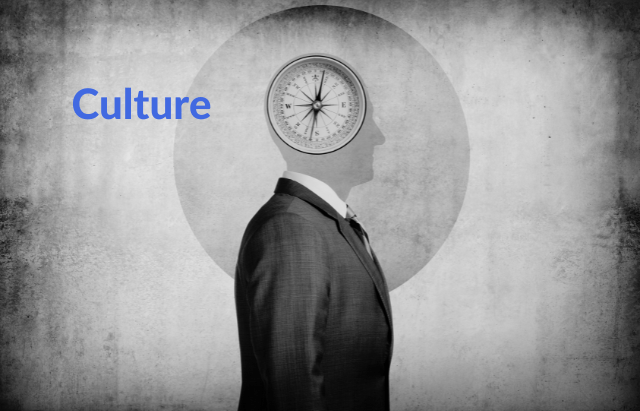
Dystopian Fiction and You
There is a particular kind of reading that happens not for pleasure or escape or the civilized leisure of the well-appointed afternoon, but out of something closer to necessity. The necessity of the person who needs to understand the room they are standing in and cannot find the map anywhere else. The necessity of the person who has looked at the news and felt something that the news, with its relentless commitment to the immediate, cannot quite name. Dystopian fiction has always served that reader. Right now, there are more of them than there have ever been.
In 2026, dystopian fiction sales have surged thirty-seven percent above their already elevated 2025 levels, as readers turn to these stories not for escape — the word feels wrong, almost insulting in its misdirection — but as what one analysis called diagnostic tools: instruments for decoding the specific shape of the anxiety the present is producing, for naming the unnamed thing that keeps arriving in the middle of ordinary days with its cold hand and its patient insistence.
Octavia Butler wrote Parable of the Sower in 1993. She set it in 2024. In 2024, the book surged back onto bestseller lists with a velocity that had nothing to do with nostalgia and everything to do with recognition. Readers were not discovering a neglected classic. They were finding that a dead woman had written their present tense thirty years before they arrived in it.
That is what urgency means, in the context of dystopian fiction. Not timeliness — timeliness is a quality of journalism, which is accurate now and irrelevant by morning. Urgency is the quality of the thing that was true before you knew it was true and will be true after the moment passes and the news moves on. It is the quality that made The Handmaid’s Tale feel more relevant in 2017, thirty-two years after its publication, than it did in 1985. It is the quality that makes the great dystopian novels not artifacts of their moments but lenses through which subsequent moments are seen more clearly than they could be seen without them.
This post is about that urgency: where it comes from, why it persists, what it is actually doing when a reader picks up a dark future and carries it home like medicine.
The Moment the Fiction Became the Protest Sign
In 2017, something happened in American public life that had not happened before in quite the same way: the costume of a fictional character became a political uniform. Women wearing the deep red cloaks and white bonnets of Atwood’s Handmaids appeared in state legislatures across the country, standing in silent rows in the galleries above the deliberating bodies below. They were protesting proposed restrictions on reproductive rights. They were dressed as characters from a novel. And the sight of them was unmistakably, immediately, internationally legible.
No one needed to explain the reference. No one needed to explain the costume’s meaning or its resonance or the argument it was making. The fiction had done that work already. Atwood had built, with the patient craftsmanship of thirty years of accumulated moral intelligence, a world so internally coherent and so externally recognizable that its imagery could be borrowed by the present and worn into the halls of actual power and understood by anyone who saw it.
That is the moment at which dystopian fiction crosses from the literary into the civic. When the fictional image becomes the protest sign, the novelist has achieved something that the journalist and the academic and the politician cannot achieve with comparable efficiency: the compression of a complex, contested, emotionally charged political argument into a single visual that anyone who has read the book — or heard of it, or seen the television adaptation, or simply absorbed its imagery through cultural osmosis — can decode in an instant.
When the fictional image becomes the protest sign, the novelist has achieved something no journalist can: the compression of a complex political argument into a single image that requires no explanation because the fiction already built the context in which its meaning lives.
Why the Genre Surges When the World Destabilizes
The data is consistent and has been consistent across every period of sustained political and social disruption in the past century: when the world destabilizes, readers reach for dark fiction. Not to confirm their despair. Not to wallow in the entertainment of simulated catastrophe. But to perform the specific cognitive and emotional work that dark fiction is uniquely capable of facilitating.
Psychological research conducted in 2025 across adolescents in Greece and the United Kingdom found that those experiencing higher levels of future anxiety — defined as sustained apprehension about the direction in which society is traveling, distinct from immediate personal fear — showed stronger support for democratic values and greater inclination toward civic participation. Future anxiety, the research found, is not a paralyzing condition. It is, when channeled through the right cognitive and narrative frameworks, an activating one. The reader who picks up a dystopian novel in a period of political instability is not indulging helplessness. They are building the cognitive infrastructure through which they will understand and respond to what is coming.
Nielsen BookScan documented a fifty-four percent increase in horror book sales between 2022 and 2023 in the United Kingdom alone. Book Riot’s industry analysis confirmed the surge in dark and speculative fiction across the same period. The publishing professionals consulted in those analyses said the same things in different ways: readers in crisis reach for fiction that mirrors and amplifies the crisis, because the mirroring is itself a form of mastery. You cannot control what frightens you. But you can read about it, inhabit it, follow it to its consequences from the safety of the frame — and the reading changes you in ways that mere awareness cannot.
This is Aristotle’s catharsis in its contemporary form. Not the purgation of ancient drama but the diagnostic reading of future anxiety: the use of fiction to name the unnamed, to map the unmapped, to hold the shape of a fear steady enough and long enough to see what it actually is and what might be done about it.
The reader who picks up a dystopian novel in a period of political instability is not indulging helplessness. They are building the cognitive infrastructure through which they will understand and respond to what is coming. The reading is a form of preparation.
Butler’s Patience and the Nature of Prophetic Fiction
Octavia Butler published Parable of the Sower in 1993, set in the years 2024 through 2027. In it, a young Black woman named Lauren Olamina navigates a collapsed California in which climate disaster has shattered the social infrastructure, corporations have assumed governmental functions, income inequality has produced a population of wandering, desperate people, and political discourse has been captured by a demagogue whose slogan is the promise to make America great again.
Butler was not a prophet. She was something more useful: a rigorous, disciplined, morally serious extrapolator of existing trends. She looked at the America of 1993 — its income inequality, its climate trajectory, its corporate power, its political polarization, its history of racial violence — and she followed those trends forward along their existing vectors to see where they went. She did not predict 2024. She described the structural logic of the present she was standing in, and the structural logic turned out to be durable enough to produce a future that looked, from inside it, eerily like her novel.
This is the mechanism of prophetic fiction, and it is not supernatural. It is structural. The dystopian novelist who does the work — who researches the trajectories, who understands the systems, who follows the logic of the present to its consequences with the intellectual honesty to report what she finds rather than what she hopes — will produce a novel that gains rather than loses relevance as time passes. Because the trajectories are real. Because the logic is durable. Because the systems that were already in motion in 1993 were still in motion in 2024, having had thirty additional years to compound and deepen and express themselves in the world.
Butler’s sales spike in 2024 was not ironic. It was not a coincidence. It was the recognition of structural accuracy by readers who found themselves inside the world she had described and needed the map she had drawn.
The dystopian novelist who does the work will produce a novel that gains rather than loses relevance as time passes. Because the trajectories are real. Because the logic is durable. Because the systems already in motion keep moving, and the map drawn from inside them stays accurate longer than anyone comfortable would prefer.
What the Fiction Does That the News Cannot
The journalism of our moment is extraordinary in its velocity, comprehensive in its coverage, and structurally incapable of performing the specific cognitive and emotional service that dystopian fiction provides. This is not a criticism of journalism. It is an observation about the different things that different forms of knowledge do.
Journalism tells you what happened. It can tell you, with considerable precision, the specific policy that was enacted, the specific norm that was violated, the specific institution that was weakened or captured or bypassed in the specific week in which these things occurred. What journalism cannot do, constrained as it is by the requirements of immediacy and specificity and the professional obligation to separate fact from interpretation, is tell you what it feels like to live inside the accumulated weight of all of those specific things, week after week, year after year, until the accumulation becomes the climate and the climate becomes the world.
Fiction tells you what it feels like. It places you inside the body of a character who is living through the consequences of the systems that journalism describes, and it keeps you there for three hundred pages, which is long enough for the consequences to become embodied knowledge rather than intellectual information. The reader who finishes The Handmaid’s Tale does not merely know that reproductive rights can be removed by state power. They have inhabited the removal. They carry it differently. They recognize its shape in the world around them in ways that no quantity of accurate, well-reported journalism can produce with equivalent efficiency.
This is why the genre surges when the world destabilizes. Not because readers want to be frightened, but because they need to be informed in the specific way that only fiction can inform them. They need the embodied knowledge. They need the three hundred pages. They need the thing that the news, for all its virtues, cannot give them.
The news tells you what happened. Fiction tells you what it feels like to live inside the accumulated weight of what happened, week after week, until the accumulation becomes the climate. The embodied knowledge that fiction produces is different in kind from the intellectual information that journalism provides. Both are necessary. Only one of them changes the body.
The Particular Urgency of the Present Moment
Global freedom has declined for nineteen consecutive years, according to Freedom House’s 2025 report. Sixty countries experienced deterioration in political rights and civil liberties in 2024 alone. The Century Foundation’s United States Democracy Meter dropped twenty-eight points in a single year, from seventy-nine to fifty-seven out of a hundred. Fifty-three countries are now rated more free than the United States by Freedom House’s current assessment.
These numbers do not mean the United States is a dystopia. The previous post in this series drew the distinction carefully: a broken society can still be resisted; a dystopian society has dismantled the infrastructure through which resistance is organized. The current condition is not the latter. But the current condition is measurably, documentedly, nineteen-years-of-consecutive-decline closer to the latter than it was. And the question of how close is too close — the question of how much dismantling can be absorbed before the conditions of resistance become structurally unavailable — is exactly the question that dystopian fiction has always been best equipped to make viscerally real.
This is the particular urgency of the present moment. Not that we have arrived at the destination. But that the distance to it is measurable and the measurement is moving in one direction and the fiction that maps the destination is the best cognitive tool available for understanding the journey.
That is why the sales are surging. That is why Butler’s thirty-year-old novel found new readers in the year it was set. That is why the red cloaks appeared in the legislatures. That is why the genre does not age, does not become irrelevant, does not retreat into the comfortable antiquity of the purely historical.
Dystopian fiction is urgent today because the world is producing the conditions that the genre was built to illuminate. It has always been this way. Every period of sustained political destabilization in the past century has produced a corresponding surge in the fiction that maps it. The mapping is not passive. The mapping is the work.
Dystopian fiction is urgent today because the world is producing the conditions that the genre was built to illuminate. The mapping is not passive. The reader who finishes the book carries something into the world that they did not have before they opened it. That something is the genre’s entire justification.
What the Reader Takes Home
Here is what happens, as best as I can describe it from both the inside of the writing and the outside of the research, when a reader finishes a serious dystopian novel in a serious political moment.
They carry home the map. Not a map of a fictional world — the geography of Panem or Gilead or Oceania is not the point and the serious reader knows it is not the point. They carry home the map of the logic: the specific causal chain through which a functioning society becomes an unfunctioning one, the specific mechanisms through which power concentrates and distributes and protects and punishes, the specific human costs that the abstract political vocabulary of rights and democracy and institutional erosion translates into when it arrives in the body of a specific person living a specific life.
They carry home a vocabulary for things they were already experiencing but could not name. This is among the most underrated functions of serious fiction: the provision of language for conditions that the available public vocabulary has not yet adequately addressed. Readers who found the word gaslighting in a psychology text and suddenly understood what had been happening to them for years know this function from the inside. Readers who found their political moment in the pages of The Handmaid’s Tale or Parable of the Sower or 1984 know it too: the sudden, clarifying shock of recognition, the sense that someone has named the unnamed thing and by naming it has made it possible to see.
And they carry home — this is the part that surprises people who assume dark fiction is merely dark — something that functions as hope. Not the soft, comfortable hope of the story with a happy ending. But the harder, more durable hope of the person who has looked directly at the worst plausible outcome and discovered, in the looking, that it is not unnameable, not incomprehensible, not beyond the capacity of human understanding and human resistance. That people like them have lived through things like this before. That the love and the community and the handmade truth and the stubborn insistence on remembering — all of it survives. All of it persists. All of it, in the end, matters.
That is what the genre offers. That is why the urgency does not diminish. That is why the readers keep coming, in their surging, searching, necessary numbers, reaching for the dark fiction and finding in it not escape but the specific illumination that the bright world is too busy and too comfortable and too committed to the management of its own anxiety to provide.
The fiction is urgent because the world is urgent. The world is urgent because the trajectories are real. And the trajectories are real because the decisions that will shape them are being made right now, by people who have and have not read the books that map where the decisions lead.
Sources Cited
The publishing data, psychological research, and literary tradition underlying the argument this post makes.
Publishing Data: The Dystopian Surge
- Pangea Society / Medium — Why Dystopias Are So Popular Right Now: Fiction in an Age of Political Anxiety (2026) — https://medium.com/@pangeasociety/why-dystopias-are-so-popular-right-now-fiction-in-an-age-of-political-anxiety-b85b9561ee7c
- Nielsen BookScan — 54% surge in horror book sales 2022–2023 (via New Book Recommendation) — https://newbookrecommendation.com/statistics-on-the-popularity-of-dark-themed-literature-in-2024/
- Book Riot — Book Trend Predictions for 2025: dark fiction, political anxiety, and reader appetite — https://bookriot.com/book-trend-predictions-for-2025/
- Wicked Ink Publishing — Fiction in Focus: Publishing Trends of 2024 and What Lies Ahead in 2025 — https://www.wickedinkpublishing.com/the-red-pen-resources/fiction-in-focus-publishing-trends-of-2024-and-what-lies-ahead-in-2025
- The Science Survey — Ruin and Reflection: The Appeal of Dystopian Fiction (2025) — https://thesciencesurvey.com/spotlight/2025/03/06/ruin-and-reflection-the-appeal-of-dystopian-fiction/
Octavia Butler and the Nature of Prophetic Fiction
- Book Riot — Octavia Butler’s Parable of the Sower: the 2024 sales surge of a novel set in 2024 — https://bookriot.com/book-trend-predictions-for-2025/
- Lit Hub — Octavia Butler on writing the future from the logic of the present — https://lithub.com/tag/octavia-butler/
- The Guardian — Octavia Butler’s Parable of the Sower: a novel whose time has not passed — https://www.theguardian.com/books/octavia-butler
- Electric Literature — The structural accuracy of speculative fiction: how dystopian novels age differently from other genres — https://electricliterature.com/tag/speculative-fiction/
The Psychology of Future Anxiety and Dark Fiction
- Pangea Society — Future anxiety research (2025, Greece and UK): how apprehension about society’s direction activates civic participation — https://medium.com/@pangeasociety/why-dystopias-are-so-popular-right-now-fiction-in-an-age-of-political-anxiety-b85b9561ee7c
- Psychology Today — The psychology of reading dark fiction: catharsis, anxiety, and the reader’s response — https://www.psychologytoday.com
- Greater Good Magazine, UC Berkeley — Why we read fiction that frightens us: the cognitive and emotional benefits of dark narrative — https://greatergood.berkeley.edu/topic/meaning
The Handmaid’s Tale, the Red Cloaks, and the Civic Function of Fiction
- Lit Hub — Margaret Atwood on The Handmaid’s Tale, the red cloaks, and the crossing of fiction into protest — https://lithub.com/tag/margaret-atwood/
- The Guardian — The Handmaid’s Tale at 40: from speculative fiction to political uniform — https://www.theguardian.com/books/margaret-atwood
- The Atlantic — When dystopian fiction becomes political protest: the civic power of the fictional image — https://www.theatlantic.com/entertainment/
- NPR Books — Why dystopian fiction resonates when the real world feels unstable — https://www.npr.org/books/
Freedom House and the Democracy Data
- Freedom House — Freedom in the World 2025: 19th consecutive year of declining global freedom — https://freedomhouse.org/report/freedom-world/2025/uphill-battle-to-safeguard-rights
- The Century Foundation — United States Democracy Meter 2025: 57/100, down 28 points in one year — https://tcf.org/content/report/centurys-new-democracy-meter-shows-america-took-an-authoritarian-turn-in-2025/
The Craft and Purpose of Dystopian Fiction
- com — Why dystopian fiction still matters: the genre’s enduring civic function — https://www.tor.com/tag/dystopia/
- Reedsy Discovery — The Ultimate Guide to Dystopian Fiction: craft, purpose, and the urgent reader — https://reedsy.com/discovery/blog/dystopian-fiction
- Jane Friedman — Writing dystopian fiction in a politically anxious moment: the author’s responsibility — https://www.janefriedman.com/blog/
- MasterClass — How to Write Dystopian Fiction: the urgency behind the craft — https://www.masterclass.com/articles/how-to-write-dystopian-fiction